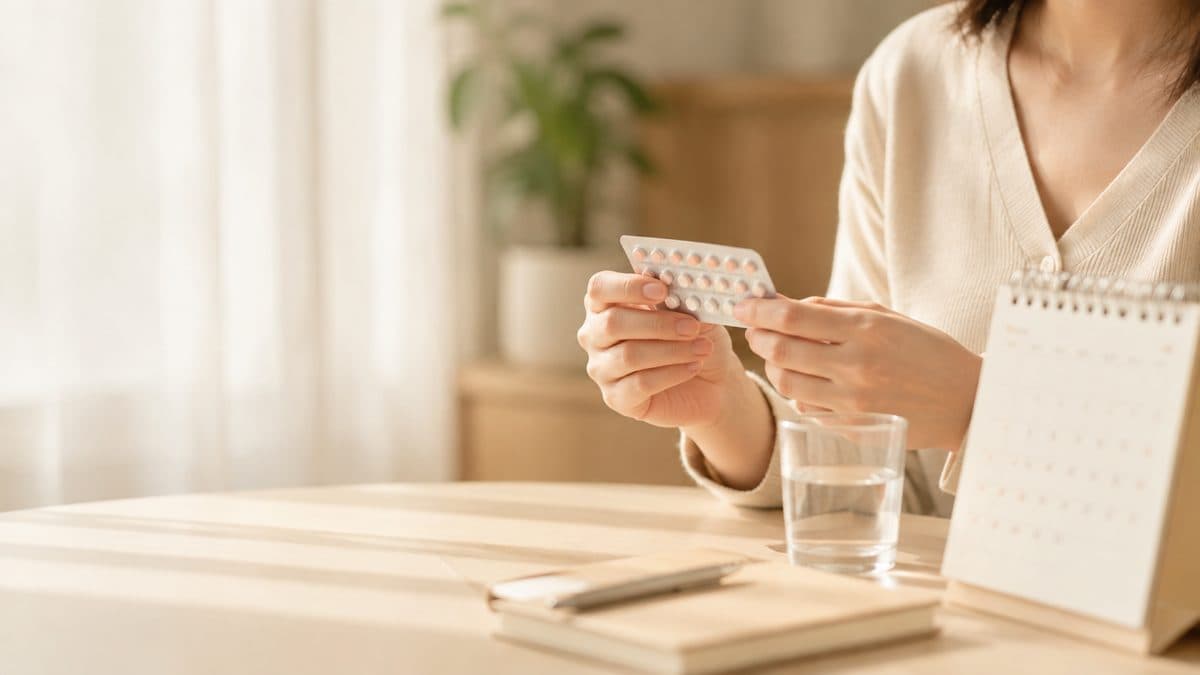
Emergency contraception is one of the few places in medicine where a few hours genuinely change the odds. But most of what people search at that moment is not medical — it is logistical. Where can I get this tonight, do I have to see a doctor, will anyone ask me questions. This guide puts the medicine and the logistics together, because at that hour they are the same problem.
The clock is most of the answer
Emergency contraception works mainly by delaying ovulation so that sperm already present have nothing to meet. That one fact explains everything else about it — including why the hours matter so much. If ovulation has already happened, there is nothing left to delay, and the medicine cannot do its job.
- Levonorgestrel is licensed for use up to 72 hours, and works best in the first 24.
- Ulipristal acetate holds its effectiveness closer to the full 120 hours, which is why it is often the better choice past day one.
- A copper IUD can be fitted up to five days after and is the most effective of the three by a wide margin.
If it is the middle of the night or a weekend, do not wait for a convenient appointment later in the week. Take the first slot that exists. A day of delay costs more than an inconvenient hour.
Two medicines, and one option that is not a medicine
| Option | What is worth knowing |
|---|---|
| Levonorgestrel | The familiar one. Best within 24 hours, licensed to 72. You can start a hormonal method again immediately afterwards. |
| Ulipristal acetate | Holds up better late in the window, to 120 hours. Do not take it together with a hormonal method, and wait five days before starting one. |
| Copper IUD | The most effective emergency contraception that exists, fitted within five days — and it stays as contraception afterwards. |
The choice is usually made by how much time has passed, what you are already taking, and whether you want contraception to continue afterwards. It is a short conversation, not a long one.
Getting it in Korea
Korea separates these two in a way that surprises most people who arrive here: regular contraceptive pills are sold over the counter at any pharmacy, and the emergency pill is not. The emergency one needs a prescription, so a short clinic visit is the route — in person, or by telemedicine where that is available.
The visit itself is brief. There is no examination for a prescription, and you will not be asked to justify anything. What the doctor actually needs is small:
- When it happened — the date and roughly the hour.
- The first day of your last period, as close as you can get.
- Anything you take regularly, including a contraceptive method and any supplements.
- Whether you have used emergency contraception already in this cycle.
Emergency contraception is not covered by national health insurance, since it is not treatment for an illness. A clinic can tell you the cost when you ask — and if you are new to the system, our guide to health insurance for foreign residents explains what is and is not covered more generally.
After you take it
- Nausea is the common one. If you vomit within about three hours of taking it, call — the dose may not have stayed down.
- Spotting in the days after is normal and is not your period.
- Your next period may shift, early or late, usually by less than a week.
- Tender breasts, headache or tiredness for a day or two is ordinary and passes.
The part that most often goes unsaid is what happens to your ongoing contraception, and it differs between the two medicines:
Emergency contraception covers what already happened. It does not protect the rest of the cycle, so anything later in the same cycle needs its own protection.
Knowing whether it worked
There is no test that confirms emergency contraception succeeded. The only signal is the ordinary one: your period arrives. It may come a few days off its usual date, and that by itself means nothing.
If it is more than a week late, take a pregnancy test. A test is reliable from about three weeks after the event, or a week after a period was due — earlier than that and a negative does not settle anything.
If the test is positive, you have time and you have options, and nothing about the next step has to be decided today. Our guide to an unplanned pregnancy in Korea sets out what each one involves.
Common questions
Can I just buy it at a pharmacy?
No. In Korea the emergency pill is prescription-only, even though regular contraceptive pills are sold over the counter. A short clinic visit is what stands between you and the prescription, and there is no examination involved.
Is this the same as the abortion pill?
No, and they are not related. Emergency contraception prevents a pregnancy from starting, mainly by delaying ovulation, and it has no effect on a pregnancy that already exists. The medicines, the timing and the purpose are all different.
Does taking it repeatedly harm me?
There is no known lasting harm from repeated use. What happens instead is that your cycle gets unpredictable, and that over a year you are far less protected than someone using an ongoing method. Repetition is a reason to change method, not a reason to worry about damage.
Does body weight affect how well it works?
It can. Levonorgestrel appears to lose some effectiveness at higher body weight, while ulipristal holds up better, and a copper IUD is unaffected. It is worth mentioning at the visit, because it is one of the things that tips the choice between the three.
Can I take it while breastfeeding?
Levonorgestrel is considered compatible with breastfeeding. Ulipristal carries advice to express and discard milk for a period afterwards, so say that you are breastfeeding at the visit — it changes which one is suggested.
Talk to someone, privately
Ium in Seocho supports international women with confidential, English-speaking care. Reach out with a message or a call — no pressure, no judgment.
Book a private consultationThis article is general information, not medical advice, and does not replace a consultation with a licensed doctor. Details of care and current guidance should be confirmed directly with the clinic.